Wednesday, September 8, 2010

Equal Parts Adventure and Inspiration: How I learned to appreciate what I thought I hated most

Because I am in a food and wine writing class this semester, I thought I'd just go ahead and post what I write for the class on here. This is for our personal essay assignment.

Confession: I am a foodie who despises seafood. You may begin the crucifixion.

Really, it’s not my fault. I blame my parents. The extent of my seafood exposure as a child was limited to Van de Kamp’s fish sticks, and I don’t even think that counts as fish at all. It’s a shame, honestly, because I’m jealous of those who can savor salmon. I’m envious of those who delight in oysters on the half shell. I get green-eyed over those who close their eyes as they bite into a perfectly cooked tuna steak. Because when I eat any of it, my gag reflexes set in and I reach for a napkin. It’s not a pretty picture.

Taste buds are a strange thing. I remember hating tomatoes as a child. I would watch my father bring in homegrown Missouri tomatoes—the best there is—slice them up, salt and pepper them and serve them as a side with dinner. Mostly, I was confused. Why would he offer us a slice of tomato as a side to my chicken? It made no sense until I grew up and found myself doing the same thing.

I wasn’t ever a picky child. I ate my vegetables religiously and never spit anything out. There’s a relatively short list of things I wouldn’t eat: olives, mushrooms, sometimes milk. Of course, today I love all of these. I drink whole milk and wish it were more socially acceptable to just go ahead and drink heavy cream instead. I love the earthy taste of mushrooms—the subtle way they seem to perfectly round out the flavors of almost any dish. And briny, salty, glorious olives? Let’s just say I’m grateful my taste buds decided to cooperate with me before my first travels abroad.

This past summer was the first time I traveled outside of the country. My best friend and I departed on our three-week European adventure ready to conquer the world (all right, maybe not the world, but I was certainly going to conquer any food I encountered). I couldn’t wait to get my mouth around delicious pasta in Italy, gyros and Greek yogurt in Greece and croques-monsieurs from France. What I hadn’t really taken into consideration was this: our adventure consisted of a cruise around the Mediterranean. As in, ship in the sea stopping in ports on the coasts. What did this mean? It meant seafood. A ridiculous amount of seafood.

I hoped I could wrangle my taste buds into loving seafood much in the same way I had for mushrooms or olives. What I found to work, instead, was a strong shot of adventure and inspiration. While in Cannes, a bright, lively town on the French Riviera, I tried steamed mussels for the first time. I probably would not have tried them, but I was feeling bold and daring after stumbling upon the most beautiful outdoor market I’d ever seen just hours earlier. The market was unbelievably colorful and beautiful; it was alive in a way that no market here is. I came away feeling cultured and well, European. So when the mussels were presented to me, I didn’t hesitate. Were they the best thing I’ve ever tasted? Of course not! But it didn’t matter, because I was sitting in a cafĂ© in the French Riviera opening myself up to a new opportunity.

I spent the rest of the trip trying anything new I could, especially seafood. I tasted grilled octopus and sardines in Santorini, squid in Athens and scallops in Venice. It was liberating to try so many things I’d never tasted before—dishes I would have scrunched my nose at and been terribly dramatic about back at home. In Europe though, I was free to try any of it because I didn’t want to look back on my trip and wonder why I stayed so boring, so safe during such an amazing experience.

Now that I am back at home, I don’t eat seafood. Why would I? I still don’t particularly enjoy it, even though I’m hoping I can learn to love it one day. But that spirit of adventure I picked up along the coasts of the Mediterranean still lives within me. I don’t say no when given the choice to try something new, because you never know—it might just be the best thing I’ve ever had.


Grand Canal in Venice


Taken in Cannes, from a hill with a quaint little church on it


The most delicious Greek yogurt I've ever eaten


Grilled sardines in Santorini

Friday, June 11, 2010

European Eats: Vieille Ville Market

After three weeks of traveling around Europe, I am finally back at home.

Of course, when I got home, I had a long list of things I had to plow through: sister's high school graduation, start my new internship at Missouri Life magazine and move into my new apartment. Now that everything is finished and my kitchen is unpacked, I've started thinking of all of the summer cooking and baking projects I'm going to try and accomplish.

I was immensely inspired by my travels through Italy, Greece, Turkey and France. While sitting down to dinner for two hours every night got a little old near day 19, it was a refreshing break from my every day life. Food is an event there. It is not treated as a ten-minute break for a brief energy source. It is treated as a social gathering -- a chance to sit down, reconnect with your family and friends and most importantly, become connected to what nature has to offer us for the replenishment and renewal our bodies (all the while slowly moving your belt buckle back a couple of notches).

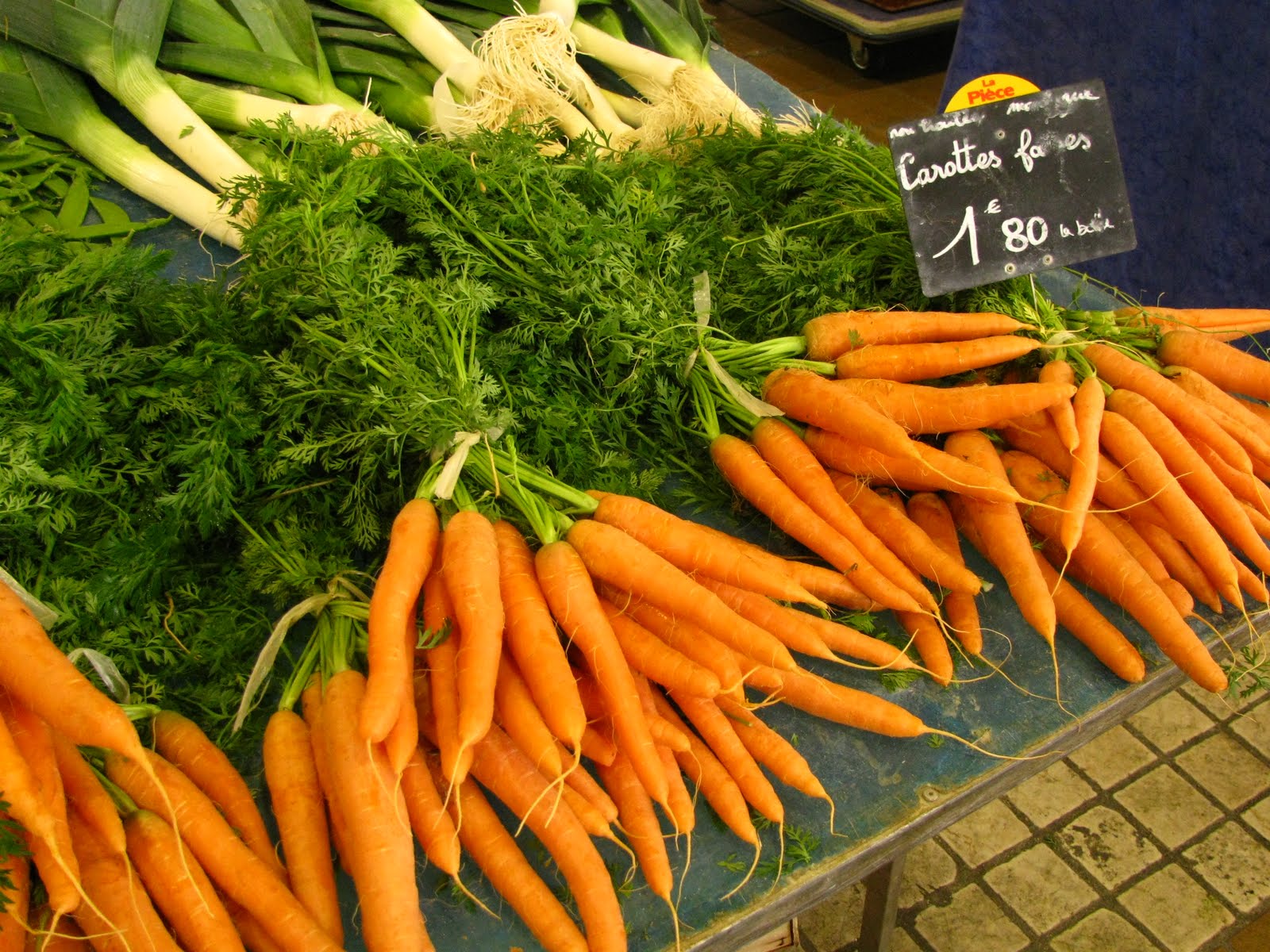
For the next couple of weeks, I will focus on what inspired me most while I was there, and then later this summer I will try to incorporate those things into my daily life. One thing that I've already tried to make a part of my life is the farmers market. While Columbia has an impressive market (seriously, they have Goatsbeard Farm there. Nuff said.), we stumbled upon an absolutely beautiful market in Cannes.

We were walking through the Vieille Ville (Old City) before making our way to the Cannes Film Festival, and we just happened to turn the corner of a small street and see this market. The food was vibrant and looked like actual works of art. I could have stayed there all day. Unfortunately, I couldn't, so instead I took a lot of pictures to remind me what food could actually be.


Wednesday, May 5, 2010

Eat With Your Eyes

After I make a tasty dish, I always try to take a picture of it. Photographing food is almost just as fun as eating it, and I'm always looking for the practice.

Unfortunately, so is Jim. He borrowed a Nikon digital SLR with a GIANT lens from a friend a couple of weeks ago. Every time I pull out my small Canon, I feel a little silly trying to take a picture. He gets this nice camera out, puts the ridiculously large lens on it, and just when I think he's done he pulls out a tripod. I usually just put my camera away at that point! He's already posted some of those pictures on his Facebook profile.

Here are a couple of pictures that I took with my dinky camera that he hasn't already posted. Now I know to post my food pictures before he gets around to it!

Good news? He won't be able to take all of the amazing food pictures I'll be able to take when I go to Europe next week! I promise lots of great food pics!


Scalloped Potatoes from Julia Child's Mastering the Art of French Cooking


Herb Marinated Pork Loin

Homemade Pork Dumplings with Edamame

Grilled Eggplant, Endive and Asparagus

Smoked Pulled Pork


Tuesday, April 20, 2010

Food for Thought

While cooking is undeniably one of my life's greatest passions, I can't forget the pastime I fell in love with first--reading. I remember getting in trouble as a kid for bringing my book to the kitchen table. I finished the last Harry Potter book in 10 hours. And I'm currently wading my way through Anna Karenina.

Reading has always been a comfort to me. I voraciously read anything I could get my hands on as a child. It was a way for me to take a break from the world around me. It's allowed me the pleasure of letting wonderful characters into my life, some of which feel like real people to me. Often, I find myself missing certain characters, and that's usually when I'll pick up the book and read it again. My favorite books can't go more than three years without me reading them once more.

How lucky am I, then, that so many books center around food and cooking? It's with these books that I can merge my passions, which is not only amazing, but very efficient since I am quite busy!

I've managed to read a couple here and there, and when I get the time, I'd love to read more. In fact, I'll probably need a couple for my trip to Europe in three weeks. Any suggestions?

Until then, below are two wonderful books on how food and cooking transformed the lives of two well-known culinary icons.

My Life in France by Julia Child and Alex Prud'Homme

While this book is mainly autobiographical, it is full of delicious French food. Child's experiences in France and in becoming a major icon is written with such love and enthusiasm, you can't help but be inspired.

Since I am also a fan of French culture, it was a triple delight for me to read this book. The descriptions of French life are lovely and picturesque. If you are looking for a relaxing, and quite funny, read, I strongly recommend this book.


Kitchen Confidential: Adventures in the Culinary Underbelly by Anthony Bourdain


One New Year's Eve a couple of years ago, Jim and I stumbled across a No Reservations marathon on the Travel channel. I very quickly became enamored with Bourdain's wry and sarcastic commentary on the culinary cultures around the world. From Paris to Thailand to Portland, Ore., Bourdain travels the globe sampling each culture's cuisine.

His personality shines through in this well-written book. Just like his show, Bourdain leaves nothing out in this portrait of how a restaurant kitchen operates. It's dirty, it's gross and it's one hell of a laugh. You'll learn more than you ever wanted to know about restaurants!

Tuesday, March 23, 2010

Save the Date: Farm to Table Festival


Let's just pretend I've been a good blogger, and that I've posted at least once a week. Pretending yet? Ok, good.


Like I mentioned in an earlier post, I am quite fortunate to have the great opportunity of helping with the Farm to Table Festival being held June 12-13. It's being hosted by the University Club, and I'm pretty excited about it. Some of the great things being offered include:


  • Cooking demonstrations by local and regional chefs, including Mike Odette (Sycamore), Craig Cyr (Wine Cellar and Bistro) and Jonathan Justus (Justus Drugstore). See all of the chefs and presenters here.

  • Seminars and presentations on topics such as: sustainable agriculture, home preservation techniques, cooking with micro beer and more.

  • Reception dinners provided by all of the amazing chefs.

As you can see, it's going to be pretty fun. The schedule is still in the works and will be uploaded to their site soon, and I'm pretty sure registration will be available in April.


You can follow them on Twitter and you can also become a fan of them on Facebook (Farm To Table UClub is their fan page name). Look out for a chance to win tickets and t-shirts for the event over the next couple of months!

Tuesday, February 9, 2010

Tweet Tweet...

...I'm now on Twitter.

After much internal debate, I decided it's a good thing. It will be a good way to stay connected with others promoting food and wine, and a good thing to highlight on my resume since everything is about social media now.

After I use it for a couple of days, I'll know which users are the best to follow for good food articles and will be quick to let you know!

Visit me on Twitter!

Saturday, February 6, 2010

It's Cold Outside!

Even though I'm perfectly ready for spring, the weather has other ideas. For the past couple of days, the sky has been spitting drizzle, freezing rain and snow, leaving the streets a complete mess. How do I deal with this? I stay inside and don't do anything. Except cook, of course!

When it's cold and snowy outside, I want something warm and hearty. Pot pies are the perfect answer. When I was little, we would have homemade chicken pot pie, but I decided to play with some ingredients and make it a little more interesting.

Lamb and Pea Pot Pie

1-2 T. olive oil
1 onion, diced
1 garlic clove, minced
3/4 lb. - 1 lb. ground lamb
1 tsp ground turmeric
1/2 tsp. allspice
2 T. flour
3 c. chicken stock
1/2 c. water
5-6 small red potatoes, diced
1 c. frozen peas
Pie Crust (homemade or store bought sheets)
Milk, for pie crust

Note: You can use ground beef instead of lamb, but the lamb is really delicious. Try it!

Heat 1 T. olive oil in large skillet over low heat. Add the onion and a pinch of salt and let cook until onions are tender, about 5 minutes. Bump up the heat to medium and add the lamb. Add the turmeric, allspice and garlic. Cook until the meat is browned.

Remove the skillet from the heat and add the flour and 1 T. of the chicken stock. Return the skillet to the heat and add the remaining stock and water. Bring to a boil, then reduce the heat until it is simmering. Add the potatoes. Simmer gently until the liquid reduces and the potatoes cook through, about 20-25 minutes.

Preheat the oven to 400 degrees. Spoon the filling into a prepared pie shell (frozen or homemade). Add another sheet of pie dough, covering the filling. Gently press the two sheets of pie crust together. Trim off the excess dough. Fold the pie dough over (this is the dough that is hanging over the pie dish) and tuck it under into the dish.

Cut three small slits in the top of the dough. Brush the top of the pie all over with some milk. Bake for 30-40 or until pie is golden.


Thursday, January 28, 2010

Date Night

Even though I've been with Jim for three years, we still like to go out on dates or have date nights at home. Food almost always ends up playing a major role in our dates. Most of the time, our dates revolve around food.

In the past two weeks, we went on two different kinds of dates. On one, we stayed at home and made a delicious pasta dish and lemon souffles. On another, we went to Encore!, Upper Crust Bakery's Wine and Dessert Bar. Both were fun and not too expensive.

Date Night In:

Jim's had his eye on perfecting his souffle making skills, so for our most recent date night at home, that's what we made for dessert. For dinner, I found a recipe in Fine Cooking for pasta with brussels sprouts, gorgonzola and brown-butter pecans. I altered the recipe, which I usually do, but this recipe was pretty fantastic. The brussel sproats are roasted, giving them a great flavor.

Pasta with Brussel Sprouts, Gorgonzola and Brown-Butter Pecans


4 c. brussel sprouts
3/4 lb. farfalle pasta (or any other fun-shaped pasta you like)
1 1/2 T. butter
1/2 c. chopped pecans
1/2 medium onion, minced
1 c. heavy cream
4-5 oz. gorgonzola cheese*
1 T. fresh lemon juice
3 1/2 T. olive oil

*Note: If you can't find gorgonzola, you can use blue cheese for a similar flavor.

Move an oven rack to the lower third of the oven and place a rimmed baking sheet on it. Preheat oven to 475 degrees F. Bring large pot of water to a boil.

Trim the brussel sprouts by taking any wilted outer leaves off and cutting off the bottom part. Slice the brussel sprouts lengthwise 1/4'' thick. In a large bowl, toss the brussel sprouts with the olive oil and salt and pepper. Take out the baking sheet and spread the brussel sprouts in an even layer on the sheet. Roast the brussel sprouts for 15-20 minuts. Turn halfway through.

While those are roasting, cook the farfalle until al dente. Meanwhile, melt 1/2 T. butter in a small skillet over medium heat. Add the chopped pecans and let cook until the butter is brown and bubbling. The pecans will toast as this happens, usually after 2-3 minutes. Remove from pan and set aside.

In a large skillet over medium heat, melt the remaining butter. Add the onions and let cook until they are softened, about 3 minutes. Add the heavy cream. While stirring, bring to a simmer. When it is at this point, take the skillet off the heat and add 3 oz. of the gorgonzola cheese to the cream sauce and stir until the cheese melts.

When the pasta is done and has been drained, toss the pasta together with the roasted brussel sprouts, the gorgonzola cream sauce and the lemon juice. Top with the brown-butter pecans and remaining gorgonzola cheese.

*******

The lemon souffles were the perfect dessert. Jim did a great job! I don't think any of them fell.


Date Night Two:

Starting at 7 p.m. Thursday-Saturday, Upper Crust becomes Encore, a wine and dessert bar. Featuring a menu almost completely made up of desserts and cocktails, it's for those with serious a sweet tooth. We got the Encore Fantasy, which features five of their most popular desserts: Strawberry Passion (strawberry ice cream cake), Chocolate Decadence (flourless chocolate cake), Seasonal Sorbet, Ultimate Sundae (fudge brownie) and handmade chocolates.

It was pretty good. What I liked most about it was getting to taste a lot of different desserts. If I go again, I will definitely pick from their list of individual desserts.

For a date, it's not badly priced. Of course, this is just dessert, so you'll have to eat dinner beforehand!


Thursday, January 14, 2010

Birthday at Lemaire

I'll just start this by saying (two weeks late, by the way) that one of my resolutions is to post more frequently. We'll see if that happens once school and work start up again!

Christmas break was wonderful. Lots of family time and good food! I visited my grandparents in Richmond, VA for a week. For my 21st birthday, they took Jim and me to a very nice restaurant in the city. The restaurant, Lemaire, is in The Jefferson Hotel, which is absolutely gorgeous.

The hotel is around 100 years old. To get to the restaurant, we had to walk up this very large staircase.

My dinner for the evening included: goat cheese and roasted beet salad with smoked honey, pan-seared loin of lamb with mustard spaetzle, and a very delicious chocolate Grand Marnier terrine.


My half-eaten dessert. I tried to eat it all, but by then I was so stuffed I couldn't.


As a special surprise, my grandparents arranged for me to meet the chef, Walter Bundy. It was my first time getting to talk to a chef, so that was pretty cool.

Of course my grandpa wanted me to take a picture with the chef after we met him. Two cameras were in use--that's why we're both looking in separate directions.

Wednesday, December 16, 2009

Quick Bites: What I've been up to

Who is the worst blogger in the world? Probably me. I can't even remember the last time I wrote on here! School and work have kept me busy, but the semester is almost done.

Instead of one long blog post, I thought I'd just give you a couple of quick points.

  • Thanksgiving was amazing. Jim and I cooked the dinner for his entire family and we managed to share the kitchen pretty well. I think we are the only couple in the world who gets into arguments about who gets to cook what dish. Both of us think the other one hijacks every meal. I really should have taken pictures of our lovely spread but in the midst of scheduling the timing of every dish, I forgot my camera! Recipes included: roasted turkey roulade with sausage and fig stuffing, mashed potatoes and gravy, green bean casserole, roasted butternut squash salad with warm cider vinaigrette and roasted pears with blue cheese. Apple pie and pecan pie for dessert--my favorites!
  • I recently celebrated a friend's birthday at Les Bourgeois. It was the first time I've been there since my senior year in high school. It was still just as delicious! If you live in Columbia, I highly recommend you try it. Even though their wine may be so-so, their food most certainly isn't. I had their Brandy Herb Marinated Roasted Pork Tenderloin. The flavor of the pork was ridiculously good. Visit http://www.missouriwine.com/ to look at their full menu.

Happy Birthday Cory! It was a great evening filled with good food and awesome friends. Too bad the boys made silly faces!
Left to right: Cory, Jim, me, Nick, Becca and Rachel.
  • I just found out at work that the University Club here at MU is partnering with the College of Agriculture, Food and Natural Resources (CAFNR) to hold a Farm to Table event in June. I work at CAFNR as the alumni communications intern, and I cannot wait to help promote and cover this amazing event. It will be a great opportunity!
  • And to end my scatter-brained post, my family is having a pot luck dinner on Christmas Eve which has now turned into somewhat of a "dish-off." I must win! Right now I'm considering making Parmesan and Thyme crackers for an appetizer, but I still don't have an idea for a side dish. Any ideas?

Monday, November 16, 2009

The Great Food Debate

The issue of food—where it comes from, who grows it, how they grow it—has been a hotly contested issue over the past couple of years. With books like The Omnivore’s Dilemma and the recent documentary Food, Inc., many are starting to question the ethics involved in food production.

Growing up, I was exposed to the world of agriculture quite a bit. I remember getting to go to work with my dad, who worked as a consultant for farmers around the state, meant getting to walk around fields and see farms. I lived across the street from a silo and cornfields and practically had cows in my backyard for a couple of years. I was even in 4-H for a brief period of time that ended in my rooster getting its head snapped off by a hawk.

Of course, I’ve had my fair share of the other side of life—dear old suburbia. And while I may not be able to look out my window and see cornfields anymore, I’ve still always been on the periphery of the world of agriculture. My internship doing public relations for the Missouri Soybean Association and Merchandising Council this summer gave me invaluable experience and exposed me to even more. Currently, I’ve got a great internship doing alumni communications for MU’s College of Agriculture, Food and Natural Resources. My days with agriculture are far from over—the other day I wrote up a small story on dairy judging.

And let’s not forget my biggest tie to agriculture: food. I love food so much that I have a blog about it! So when it comes to the much-debated issue on food these days, I find myself torn.

You see, I can’t simply say I’m for sustainable agriculture and only support local, organic foods. It’s not that simple. On the other hand, I also can’t say I completely support our current agricultural system.

I agree that the way most Americans eat is horrendous. A happy meal does not count as a meal more than once a month, if that. The solution is so simple: eat better! Eat fruits and vegetables. Eat whole grains. Eat lean protein. So, if we’ve all heard these suggestions, why don’t more people follow it?

Well, like I’ve mentioned before, I am indeed a college student living on a tight budget. I would love nothing more than to make sure that the meat I purchase is completely hormone free and that the animals were given ample opportunities to play Ring Around the Rosy in the grass while they were alive. But I know that isn’t possible because I can’t afford that.

What I can afford is the frozen chicken that Wal-Mart has, and I know it isn’t exactly excelling in quality, or ethics for that matter. Furthermore, fruits and vegetables are expensive. For a dollar or less, a consumer could get an apple, which will average about 50-60 calories, or get a small bag of potato chips that ring in at around 150 calories. Simply put, to the average consumer, it seems you get more calories for your buck with cheap, processed foods. Expecting the general public to accept a shift to sustainable local agriculture seems pretty ridiculous then.

The problem is that the general public’s attitude toward food does need to shift. Fruits and vegetables should be a higher priority. It was only this summer that I really learned much about the way subsidies work for our country’s farmers, and while I think helping farmers is great, I also think other crops should be more heavily promoted. Corn and soybeans get most of the subsidies because they serve as basic food ingredients and help feed animals that we eventually eat. Why not give more support to farmers that grow the fruits and vegetables we so desperately need better integrated into our daily lives?

Speaking of farmers, I think the issue I have most with this new food movement is the villain-ization of the American farmer. I can’t tell you how many articles I read this past summer about how farms were owned by large companies that pumped their animals full of antibiotics and pretty much ignored the general well-being of the animal.

I’m not saying there aren’t some farms out there that do that, but here’s the thing: the farms are not generally owned by large companies, the animals may be, but the farmer runs it, not the company. Secondly, it would cost a great deal to farmers to give every animal antibiotic cocktails on a regular basis. They simply can’t afford to do that. Farmers are struggling, too.

The most obvious response I have to these claims? If the farmer did not take care of their animals, then they would lose money. It isn’t in their best interest to treat the animals poorly, so they don’t. I’ve been to many farms, and in none of those farms did I see absolutely filthy conditions. Most of them are pretty clean, considering there are animals there.

There is such a large gap between Americans and their food, and making the farmers out to be the bad guy doesn’t make it any better. Americans spend 10% of their income on food—much less than other countries. If we make it more difficult for farmers to farm efficiently, the cost of our food will inevitably go up, not to mention push farmers that we have out of the picture.

I don’t know what the solution is, and I’m 100% all right with being honest about that. What I do know is that sustainable local agriculture seems a bit too idealistic. We already don’t have enough farmers; where on earth would we find even more to make sustainable local agriculture function properly? But I also know that the way Americans perceive food needs to change. Blame the system, blame commercialization, blame what you will, but blaming American farmers is the last thing we should do.

For now, I will continue to keep educating myself. I will continue to keep balancing my desire for good, fresh food with the reality that I simply cannot afford an organic free-range chicken. But most importantly, I think for now I will continue to have an open mind about this issue.

Thursday, October 29, 2009

Buffalo Chicken Pizza

I always love taking one meal and playing with the leftover ingredients the next night. Sometimes it works, sometimes it doesn't. For instance, Jim and I made pot roast on a Sunday night a couple of weeks ago and ate it every night until Thursday. Then, we made "pot roast pasta"--basically pot roast veggies and meat mixed in with egg noodles and a cream sauce based off of the jus from the pot roast. I ate it that night because I had to, but it wasn't my favorite, probably because I was really sick of pot roast.

Thank goodness last night's reinvented dinner work wonderfully. On Wednesday, Jim made his delicious pan-fried chicken, which I've posted about before. The next night, we decided to make buffalo chicken pizza with the leftover chicken breast. Yum! It's super easy if you've already got the chicken cooked from the night before and it is quite delicious.

Your favorite pizza dough will work just fine. This can be a mix, canned pizza dough, or a ball of dough from your favorite pizzeria. If you live in Columbia, I recommend stopping by Shakespeare's and asking for a ball of their large pizza dough. It costs less than $1 and it's great crust dough.


Buffalo Chicken Pizza
Pizza dough
1-15 oz. can tomato purée
2 T. wing sauce
1 T. Worcestershire sauce
3 cloves garlic, minced
2-3 T. butter
1/2 yellow onion, diced
1/2 green pepper, diced
8 oz. fresh mozzarella, sliced (or you can find mozzarella pearls)

1 to 1 1/2 pan-fried chicken breasts, cut into slices or chunks (recipe found here in previous post)

Preheat the oven to 375 degrees. Roll out the pizza dough to make a "large" pizza. It's not really technical, just roll out the dough until you like the size and thickness. Take a fork and poke holes throughout the crust to prevent air bubbles. Place the crust in the oven for 10 minutes.

In a large skillet over medium heat, melt the butter. Add the garlic and cook 1-2 minutes. Add the tomato purée, wing sauce and Worcestershire sauce. Add the chicken.

When crust is done precooking, take out of the oven. Spread the chicken sauce mixture evenly over the crust. Place the mozzarella cheese evenly over the pizza as well. Finally, spread the diced onions and green onions over the pizza.

Bake for 15-20 minutes, or until cheese is starting to brown and bubble.


Monday, October 19, 2009

Missouri Chestnut Roast


A view from the MU Horticulture and Agroforesty Research Center in New Franklin, Mo, at the Missouri Chestnut Roast. How lovely is Missouri in the fall?

This past Saturday was one of the best days I've had in a long time.

After what seemed like two solid weeks of raining and gloomy clouds, the sun finally came out just in time for the 7th Annual Missouri Chestnut Roast. Held at the MU Horticulture and Agroforestry Research Center (HARC) in New Franklin, Mo., the event featured, of course, roasted chestnuts. It didn't stop there though. There were many different producers and vendors featuring their own products and tours of the research farm and vineyards.

After trying some chestnuts, which I thought tasted like a nutty potato, we decided to walk around the vendor's tent. Les Bourgeois Winery and Schlafly Beer had tastings of some of their products, and while I didn't really enjoy Schlafly's Pumpkin Spice Beer, I finally got to try Les Bourgeois' Norton wine after studying about it AND picking the grapes! The Norton had a buttery, supple mouthfeel that was surprisingly pleasant.

Goatsbeard Farm also had tastings of their goat cheese. Goat cheese is probably my favorite kind of cheese, so we bought two of their cheeses, Walloon and Missouri Moon. The Walloon is a hard, aged cheese with a delicious bite and the Missouri Moon is a soft cheese similar to Camembert. Considering I get gourmet cheese cravings the same way a normal person might get fast food cravings, I'm glad to be stocked up! If you live in the area, I highly recommend you try Goatsbeard Farm. You can find their products at the Columbia Farmer's Market, Hy-Vee, Root Cellar and Clover's Natural Market.

Other products included: apples, a variety of nuts, chocolate, spa and bath products made from honey and a selection of potted plants from chestnuts to wildflowers. One booth even had edible insects. I must admit, I was a bit of a pansy. Jim threw the chili-flavored mealworms back like a pro while I squirmed and made stupid faces. I regret not trying them!

To end the day, we went on a walking tour of the research vineyards at HARC lead by my Grapes and Wines professor. The weather was absolutely gorgeous, the leaves were beautiful colors, and I couldn't have been any happier to be outside!

I'm glad to have a new tradition, because that's exactly what the Missouri Chestnut Roast is perfect for: getting outside on a lovely fall day in Missouri and sampling many local products.

The Missouri Chestnut Roast is held annually to promote agroforestry practices. For more information, you can visit their site here.


Saturday, October 10, 2009

Skip It: Broadway Brewery

I am so disappointed.

Last night, Jim and I went to Broadway Brewery. It just opened and we were both very excited to try their food and beer. We even got on their web site and looked at their menu. Locally grown food? Check? Interesting and innovative menu items? Check. What stuck out to me was a Butternut Bacon Pizza: "pureed butternut squash, crumbled bacon, caramelized onions, and cheddar cheese." Yum.

In fact, I looked forward to it all day. When we got to the restaurant, I was impressed. In the same space that Uprise Bakery used to be in, the restaurant was a little loud, but it had a great atmosphere. Not too bright, awesome artwork on the walls and you could see the brewing equipment next to the kitchen through windows in the back.

I looked over the menu, even though I knew what I was going to get. We ordered the Peasant Platter for an appetizer--sausages, local cheese, pickled vegetables, ground mustard and toasted baguette. Sounds good, right? Well, the couple bites I had were good. I just didn't get that many bites. We ate the entire platter in under five minutes there was so little food, and for $12, I was kind of mad.

For dinner, I ordered the Butternut Bacon Pizza. Jim ordered the Pork Burger. When we were served, I was upset again. My pizza looked like cheese melted over a saltine cracker and his burger was very small, considering it was $9. I took a bite of the pizza. My internal dialogue went a little something like this: "Way too salty and cheesy. No butternut squash flavor. Are there even any caramelized onions on it? Where is the bacon? Why does this smell like a Cheez-it?"

I then took a bite of Jim's burger. Oh boy. There was a ridiculous amount of salt on the meat. I mean so much, it was almost inedible. He would've sent it back, but we hadn't eaten in a while and were both way too hungry to wait another 15 minutes.

Jim and I looked at each other and started to laugh. For the remainder of our meal we continued to be Tom and Padma from Top Chef and "judge" our food and its appearance. Let's just say we would have asked them to please pack their knives and go home.

The manager came around after a while and asked us what we thought. I glanced at Jim quickly, and we told the manager our honest opinion. After all, we were paying nearly $30 for our meal and we didn't like almost any of it. So the manager took off the price of Jim's beer, which actually was very good.

In the end, the restaurant has a nice atmosphere, but the food is way under par. Most of the items cost right around $9-10, but the taste of the food isn't worth the price. For the sake of this restaurant, I really hope they get someone in the kitchen who knows what their doing.

I really hate having to say something bad about a new restaurant, especially one I looked forward to for such a long time, but they still have a long way to go. Oh well. At least they gave me a great idea for a new pizza recipe to try at home!

Wednesday, September 30, 2009

Pickin' Grapes and Makin' Wine

Talk about good timing.

Just when I was learning the harvesting and winemaking process in my Grapes and Wines of the World class, I actually got to go pick grapes!

A weekend or so ago, Jim and I went to his family friend's vineyard to help them harvest their grapes. They started the vineyard a couple of years ago to make their own wine.

It was a gorgeous morning--the sun was out, but it was still cool. The vineyard wasn't that big, so the work was easy. That's a good thing when you have to start at 7:30 on a Saturday morning!


Hand harvesting was all that bad. You just have to watch out for the spiders! Grape picking is glamorous, n'est pas?


Here, the grapes are in a machine that de-stems and crushes them. You just turn the hand crank on the side and the drop down into the bucket at the bottom! When we were done, they placed the crushed grapes in big food-grade plastic barrels and covered it. The skins stayed with the juice because that is where red wine gets its color and distinctive characteristic of dryness. Tannins create the "dry" sensation you feel after you drink wine and the skins are where you find the tannins.

At some point (not sure when...guess I should study a bit more, huh?) they will add sulfur dioxide to the grapes to eliminate any unwanted microbes, usually natural yeasts already found on the grapes. These wild yeasts interrupt the desired fermentation process.

Then the grapes ferment until there is no more sugar for the yeast to ferment. At this point, the skins are separated from the juice and then the wine is left to age (for red wines). The aging process helps lower the tannin level to create a more mellow wine flavor.


In this vineyard, Norton grapes are grown. Norton grapes are the state grapes of Missouri. The Columbia Daily Tribune's food section ran an article on Norton grapes and local Missouri wineries a couple of weeks ago. I know I'm excited to try it.


A lot of this information came from my class. Of course, I always want to know more than my teachers tell me, so I've been reading Wine for Dummies, and I really like it. It has a lot of information on individual grapes, wines and regions.


Thursday, September 17, 2009

Food Therapy: Pan-Fried Breaded Chicken Cutlets

Let me just start this post by saying one thing:

I hate frying.

It stresses me out, I can never get the temperature of the oil just right, and I usually end up cursing, crying, getting popped with oil or a combination of all three. The problem? Well, I love fried food. I love frying my own taco shells or making my own pork wontons. The solution? Let Jim do it!

He doesn't mind frying food, so when we make it, he takes over (thank God). I already have two scars on my hand from frying something two years ago. I don't need any more.

I've had a terrible day that involved a forgotten calculator and not understanding the shape of a dam for a conversion problem on a chemistry test. I knew nothing could fix my day like some good old fashioned food therapy! Pan-fried breaded chicken cutlets are familiar and comforting, and when served with roasted potatoes and vegetable gravy it's also refined.


Pan-Fried Breaded Chicken Cutlets

Cutlets:
4 chicken breasts, seasoned with salt and pepper
Flour
2 eggs
2 T. water
Bread crumbs
1/2 sprig rosemary

Place one chicken breast in a gallon Ziploc bag. With the flat side of a meat tenderizing mallet, pound out the breast until it is about a 1/2 inch thick. Repeat with all breasts.

Fill a dinner plate or pie dish with flour. In another dinner plate or pie dish, mix together 2 eggs and 4 t. water (2 t. for each egg). Add enough bread crumbs to another pie dish and mix in rosemary.

Dredge one chicken breast in the flour. Shake off excess flour and place breast in the egg mixture. Let excess egg mixture fall back into the pie dish. Place the breast in the bread crumb mixture and coat until bread crumbs cover the whole breast. Repeat with remaining breasts. Let the breasts rest on a plate or pan for 20-30 minutes.

Add enough oil to a heavy 10-12 inch skillet (cast iron if you've got it) to come a little less than halfway up the side of the chicken, about 1/4 of an inch. And it's important that you don't use olive oil here and instead use another oil like canola, which is still very healthy, because olive oil has too low of a smoke point for the temperature you want to aim for with this dish.

Now that you've got the right kind and amount of oil, heat the oil until it reaches 350 degrees (you have a candy/frying thermometer right?).

Once the oil is good and hot put one of the cutlets into the pan and cook evenly on each side until the internal temperature reads 165 degrees (you have a digital instant-read thermometer right?). Once done, remove the cutlet from the pan and place on a cooling rack with paper towels underneath to catch the excess oil.

If the oil has dropped below 330 degrees, wait until it reaches 350 degrees to begin cooking the next chicken cutlet.

Serve with vegetables and gravy on top.


Vegetables and Gravy
1/2 red onion, diced
1/2 zucchini, sliced
1 large carrot, sliced
Around 15 stalks of asparagus, bottoms cut off and cut into small pieces
1 T. butter
2 T. flour
1/2 c. chicken stock

While the chicken cutlets are resting before getting cooked, heat a large skillet over high heat. When pan is very hot, coat bottom of the pan with olive oil. Add the carrot and onion and let cook, stirring the whole time, for about 1-2 minutes, or until onion starts to become translucent.

Add 1 T. butter and lower heat to medium. Add the asparagus and zucchini and cook for about 1-2 minutes. Add the flour and mix together.

Add the chicken stock and deglaze the bottom of the pan. Let simmer until chicken is done. Salt and pepper to taste.


Monday, September 7, 2009

Sometimes Mistakes are Good

Classes are now in full-swing and are keeping me quite busy. I will, of course, try to update the blog as much as possible, but between classes and writing some pieces for the Tribune, I'm quite busy.

So maybe it wasn't such a bad thing I forgot the ricotta cheese in my lasagna--it made wonderful cheesecake!

If you're looking for a light dessert, try this. It's not as dense as cheesecake made with cream cheese, but it's still very good. For added elegance? Make a honey balsamic glaze reduction to drizzle over the cheesecake.

Ricotta Cheesecake

2 lbs ricotta cheese

1 cup sugar

1/3 cup all purpose flour

6 eggs

2 oranges, zested

1 t. almond extract

2 tsps vanilla extract

1/8 tsp salt

Preheat the oven to 320 degrees. Set rack in the middle of the oven.

Butter and flour a 9 1/2 inch spring form pan and tap out excess flour. Place the ricotta, zest in a large mixing bowl, and beat it until smooth. Add the sugar and the flour and continue mixing until blended. Beat in the eggs at low speed, one at a time. Add the vanilla and almond extract. Add salt.

Pour batter into the prepared pan. Bake in the center of the oven for about 1 hour, until a light golden color. Make sure the center is fairly firm, and the point of a sharp knife inserted in the center comes out clean. Cool on a wire rack. It will sink slightly as it cools. Cover, and chill until serving time.

Honey Balsamic Glaze Reduction

¼ cup balsamic vinegar


1 T. honey

Bring vinegar and honey to a boil then turn down the heat and let it simmer until it’s been reduced to half the original amount, about 10 minutes. It should stick to the back of a wooden spoon and will thicken as it cools.


Wednesday, August 26, 2009

Don't Forget the Ricotta

After spending close to six or seven hours making lasagna, we were ready to eat it. The table was set, food was on the plates and we were hungry. I cut a piece with my fork excited to finally taste what Jim and I had worked so hard on.

Then it dawned on me. We didn't put the ricotta in the lasagna. Three full tubs of ricotta were sitting our refrigerator, completely unopened, because we forgot it. It seems simple enough, right? Open the tub, spoon some on each layer and you're good. That's why we forgot it.

Let me start at the beginning. Our goal was to make homemade lasagna. All of it homemade--the sauce, the pasta, fresh mozzarella and parmesan cheese. The only thing that didn't require some form of work? You guessed it. The ricotta. And that's why it's STILL sitting in my fridge and not layered in my beautiful lasagna.

Good news? The lasagna still tastes amazing. The fresh mozzarella was definitely worth it, the sauce made my apartment smell like heaven for a day and a half AND tasted delicious and making the pasta was quite an experience.

If you're in the mood for a cooking endeavor that takes some time, try making homemade lasagna. You know you'll love it and it tastes so much better after you spend all of that time on it.

Just don't forget the ricotta.

Bolognese Sauce
2 1/2 lbs. ground sirloin/beef
1 large carrot, finely chopped
2-3 cloves garlic, finely chopped
1/2 large onion, finely chopped
4/2 14.5 oz. cans of peeled, seeded, and diced tomatoes, drained
1 1/4 c. full-bodied red wine
1/4 c. red wine vinegar
5 sprigs thyme
4 sage leaves
3 bay leaves
4-5 leaves basil

Begin by cooking the beef over medium high heat in a large pot or stock pot. Because there's a lot, you'll probably want to cook it in batches. Remove the meat once cooked and keep in a separate container.

When meat is cooked, start cooking the vegetables in the same pot. You can keep some of the fat from the meat or use olive oil instead to sweat the vegetables, which will take about 10 minutes. Add 1/4 c. of the red wine to the pot and deglaze the pan (scrape up all of the little bits of meat and veggies that are stuck to the pot).

Return the meat to the pot after deglazing. Add the rest of the wine (1 cup) and red wine vinegar. Add the tomatoes. Stir everything together. It will look very thick and like it isn't a sauce at all. Don't worry, though. The juices from the tomatoes will come out when it starts to cook.

Wrap the thyme, sage and bay leaves in the basil leaves. This is called a bouqet garni. Tie it together with kitchen twine or dental floss. Drop this into the pot.

Let sauce simmer, uncovered, for 3 hours. Ideally, refrigerate it overnight. If you do this, reheat it for 30 minutes before using in lasagna.

Homemade Pasta
5-6 eggs
4 c. flour
2 T olive oil
Pasta Machine

Form flour into a ring with a well in the center. Crack 5 eggs into the well and add olive oil.

Stir eggs around with fingers, breaking up the eggs and destroying the wall of flour. Drag more flour from the walls into the eggs.

Continue to pull flour from the walls until dough forms.

Use a sharp edge like the back of a knife to pull up the dough and work it together. If there is still loose flour, add one more egg YOLK and then the white if the dough is still too dry.

Work into a ball. (I ended up using 6 eggs total, but the dough ended up too sticky. Next time I'll use 5.)

Divide the dough into fourths. Set the rollers at the widest setting on the pasta machine. Work a portion through the rollers. Fold the dough over in half and work through the machine again. Fold and roll through again. Continue to do this until the dough feels smooth, like suede or leather.

Adjust the knob to the next smallest setting and pass the dough through. Continue to roll the dough through the machine, decreasing the width on the rollers each time. If it gets to be too long, cut in half. Place finished layers of pasta on wax paper to prevent from sticking.

To cook the pasta, bring a large pot of water to boil. Add salt and some olive oil to prevent from sticking. Place pasta in water. We boiled 1-2 strips at a time to make it less stressful. After 30 seconds, check the pasta. It should be al dente with a bit of a bite to it still.

Hint: We made this whole recipe, and didn't need all of it. For the lasagna, you'll need two strips per layer of lasagna. In the end, we used about 6-8 strips of lasagna pasta. You can store the pasta in the refrigerator for a couple days, or you can dry the pasta for a later date. Or you can just cut this recipe in half.

Lasagna
Cooked lasagna strips
3-15 oz. containers of ricotta cheese
1 1/2 lbs of fresh mozzarella, sliced
Quick Tip: Put the mozzarella in the freezer 15-20 minutes before you want to slice it. It helps firm the cheese and makes it much easier to cut it.
Bolognese sauce
1 lb Parmesan cheese, finely grated

Grease a 10 x 14 baking dish. Place 2-3 strips of the pasta in the bottom of the pan. Layer the first noodles with one third of each of the ricotta, mozzarella, sauce and parmesan cheese. Repeat for second and third layers.

Finish the lasagna with a layer of sauce, mozzarella and parmesan. Bake at 350 degrees for 1 hour and 15 minutes. Let it cool for 10-15 minutes.